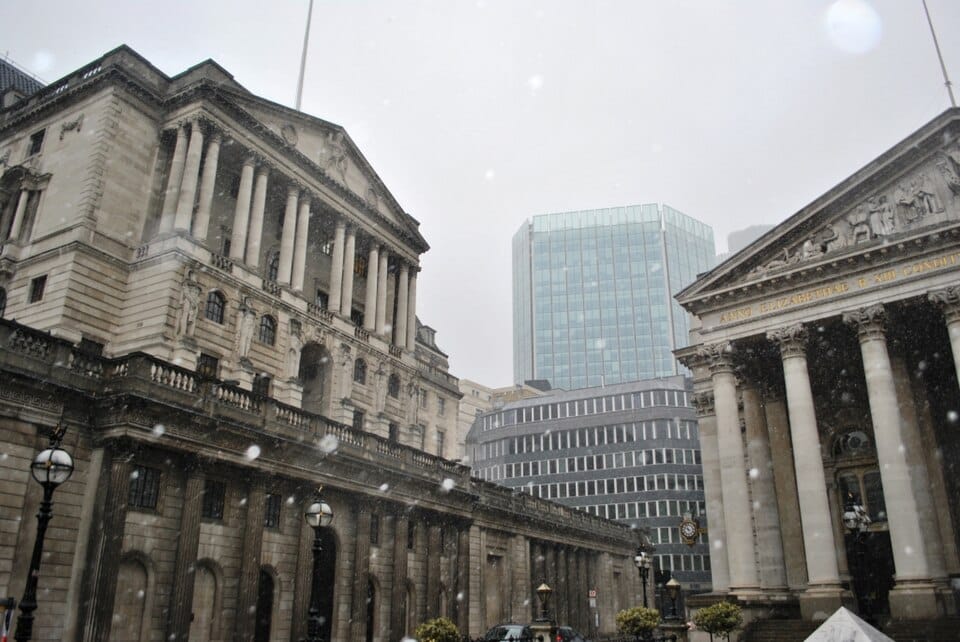
The Number That Sets the Price of Borrowing
Every time the Bank of England's Monetary Policy Committee meets — eight times a year, usually on a Thursday — lenders across the country adjust their spreadsheets. The base rate, sitting at 4.5% as of early 2026, acts as the anchor from which almost every personal loan, credit card, and mortgage rate is derived. Yet most borrowers never check it before signing a loan agreement. That is an expensive oversight.
A personal loan at 6.9% APR when the base rate is 4.5% carries a fundamentally different risk profile than the same 6.9% when the base rate was 0.1% in 2021. Understanding this relationship is not academic — it directly affects how much you pay and when you should borrow.
How the Base Rate Filters Down to Your Loan Offer
Banks and building societies borrow from each other at rates closely tied to the base rate. When Barclays or Lloyds sets a personal loan APR, they start with their cost of funds (roughly base rate plus a small margin), layer on operational costs, expected default losses, and profit margin. The result is the rate you see advertised.
This is why personal loan rates do not move in perfect lockstep with base rate changes. A 0.25% base rate cut does not automatically mean your loan gets 0.25% cheaper. Lenders absorb some changes, pass on others, and occasionally use rate shifts as cover to widen their margins. Cynical? Perhaps. But documented repeatedly by the FCA's own market studies.
Secured loans track the base rate more closely than unsecured personal loans. If you are borrowing £7,500 to £15,000 unsecured — the sweet spot where competition is fiercest — you will find rates between 5.5% and 8.9% APR from mainstream lenders in the current environment. Below £7,500, rates climb because fixed admin costs eat into thinner margins. Above £25,000, risk premiums push rates up.
The "Representative APR" Trap
By FCA rules, the advertised representative APR must be offered to at least 51% of successful applicants. That means up to 49% of approved borrowers pay more. With the base rate already elevated, this gap matters more than it did in the low-rate era. A borrower with a credit score of 650 might see 12.9% rather than the headline 6.9% — a difference of over £1,800 in interest on a £10,000 five-year loan.
Before you apply, use an eligibility checker that performs a soft credit search. Experian, ClearScore, and most major lenders now offer these. There is zero reason to submit a hard application without checking first.
When Rates Are Falling: Should You Wait?
If markets expect the base rate to drop — as swap rates suggested in late 2025 — the temptation is to delay borrowing. This is sometimes right and sometimes wrong, and the distinction matters.
Wait if: you have no urgent need for the funds, the purchase can be deferred by three to six months, and swap rates are pricing in at least two further cuts. In that scenario, personal loan rates typically begin falling before the base rate actually moves, because lenders compete for volume in anticipation.
Do not wait if: you are consolidating expensive debt. A credit card at 24.9% APR costs you roughly £207 per month in interest on a £10,000 balance. Every month you delay consolidating into an 8% personal loan, you lose approximately £140. No base rate movement will compensate for that drag.
My strong recommendation: if you are carrying credit card debt above 15% APR, consolidate now regardless of the rate outlook. The maths is unambiguous.
Fixed vs Variable: A Choice That Barely Exists
Unlike mortgages, almost all UK personal loans are fixed rate. You agree a rate at drawdown and it does not change for the life of the loan. This simplifies things enormously but also means the base rate environment at the moment you sign is locked in. There is no tracker personal loan product from any major UK lender.
The exception is overdrafts and credit cards, where rates can and do shift. If you are using a £2,000 arranged overdraft at 39.9% EAR (the standard across most high street banks post-2020 FCA reforms), the base rate is almost irrelevant — the margin is so wide that a 0.5% base rate change makes no noticeable difference.
Early Repayment and Overpayment
Under the Consumer Credit Act 1974 (as amended), you can settle any personal loan early. The lender can charge up to 58 days' additional interest — but many waive this. Settling early when rates have fallen is a legitimate strategy: take a new, cheaper loan and use it to clear the old one. Just ensure the total cost (including any settlement fee) is genuinely lower.
Run the numbers with the APRC (Annual Percentage Rate of Charge), not the nominal rate. The FCA mandates APRC disclosure for mortgages but not always for personal loans, so you may need to calculate it yourself. Include arrangement fees, settlement charges, and any payment protection insurance you might be carrying on the existing loan.
Credit Score Sensitivity Rises With the Base Rate
At a base rate of 0.1%, lenders had enormous margin to play with. They could profitably lend to borrowers with middling credit histories because their cost of funds was negligible. At 4.5%, the economics change. The gap between what a prime borrower (credit score 800+) pays and what a near-prime borrower (650-700) pays has widened from roughly 3 percentage points to 5-7 percentage points.
If your score is below 700, the single most impactful thing you can do before applying for a loan is: check your credit reports across all three bureaus (Experian, Equifax, TransUnion), dispute any errors, and register on the electoral roll if you are not already. Electoral roll registration alone can add 50+ points on some scoring models. It takes ten minutes and costs nothing.
That said, credit scoring is not destiny. Some specialist lenders — Zopa, Lending Works, and certain credit unions — use alternative underwriting models that weight income stability and spending patterns rather than relying solely on bureau scores. Worth investigating if the mainstream market prices you out.
What the Next Twelve Months Likely Hold
The futures market, as of April 2026, prices in one to two base rate cuts by year-end, bringing the rate to around 4.0-4.25%. If that plays out, personal loan rates for prime borrowers should settle in the 5.0-6.5% range — still historically elevated, but meaningfully below the 7-8% that was standard through most of 2025.
For borrowers weighing a decision today: the rate you can get now is the rate that exists. Waiting for a hypothetical better rate carries opportunity cost. Unless you have specific intelligence (published MPC minutes, inflation data, swap rate curves) suggesting a move is imminent, do not gamble.
Borrow when you need to. Fix the rate. Overpay if your contract allows. And always, always check the representative APR against your likely actual APR before applying.